
Educationist Dr Shashi K Pande on how he sees India, and how he would like to see it change.

The move is aimed at reflecting the diversity of India and highlighting the contribution of prominent personalities.

'We feel there is definitely something murky in the system.' 'Will anyone believe that Nirav Modi will go to a branch and bribe a low-level officer?' 'Just look at the people with whom he had moved around.'

Known for his witty one-liners, Naidu said "after all, the culture of India is agriculture."

In an hour-long chat on rediff.com on Friday, A K Prabhakar, senior VP and Head -- Equity Research (Retail), Anand Rathi Financial Services Ltd, discussed the best stocks to put the investors' money in.

India garnered most of the gold medals on offer for the fourth successive day at the 12th South Asian Games, as their swimmers, archers and track-and-field athletes ensured the top position on the medals tally remained unchallenged, in Guwahati, on Tuesday.

the BJP have offered support to Nationalist Congress Party chief Sharad Pawar, who is contesting for the post of president on behalf of the Pawar-Bal Mahaddalkar group, while the Shiv Sena is firmly behind the 'Cricket First' group, headed by Vijay Patil, son of Congressman D Y Patil.

This is the first time in the RBI's history that a governor is leaving without willing to renew his contract

Here's a look at some of the hashtags that trended during the first year of the Modi regime.
The BJP's panicky return to basic-instinct majoritarianism in Bihar has pushed Muslims back into the 'secular' basement, says Shekhar Gupta.
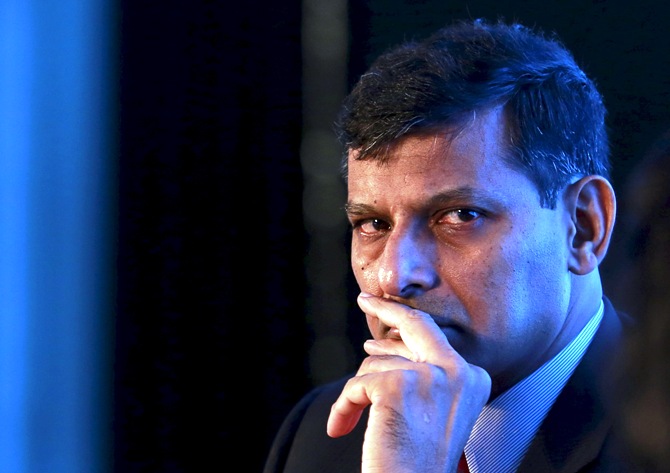
We need a change in mindset, says the RBI Governor.
Elaborating on America and India's scope of engagement, Kerry said he has seen first-hand the transformation in Indo-US relationship as well as the ups and downs in the relationship. Kerry says the world's oldest and largest democracy were "finally beginning to captalise on our connections to each other." Sheela Bhatt/Rediff.com reports after the media interaction with the US secretary of state.
'There is no remorse over the Dadri lynching of Mohammad Akhlaq or of Pehlu Khan by cow vigilante groups.' 'But should you not have remorse for those who came to kill them?' 'They were Hindus. Do you accept that?' 'That to kill one Pehlu, 20 Hindus have become murderers.' Rajdeep Sardesai in conversation with Ravish Kumar.

A round-up of the Ranji matches played on Friday

'Aamir has bigger goodwill than even the Tatas and Birlas.' 'The Sanjay Dutt biopic is amazing because of Rajkumar Hirani, because of Abhijat Joshi's writing and because of Ranbir Kapoor's acting.'

'One hopes the younger generation sees Savarkar him for what he was and does not view him through a distorted prism.' 'This is the least one could do for someone who devoted his whole life to Indian freedom struggle, elimination of caste, succour to Dalits, and instilling of strategic culture in India,' says Lieutenant General Ashok Joshi (retd) and Colonel Anil A Athale (retd).

Dr Lakshmi Vijayakumar examines why India's southern states register more suicides than the northern states. Shobha Warrier reports
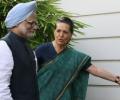
In the midst of mounting pressure from both pro and anti-Telangana leaders, Congress President Sonia Gandhi on Tuesday met Prime Minister Manmohan Singh ahead of the crucial United Progressive Alliance and Congress working committee meetings to take a final decision on the separate statehood issue.

20 years ago this day, May 11, 1998, India conducted its second nuclear test at Pokharan in Rajasthan. In a fascinating interview on Rediff.com, K Subrahmanyam revealed how Indian PMs reacted to nuclear ambitions.
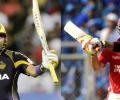
The Most Valuable Player (MVP) race will be a direct face-off between Kings XI Punjab's hard-hitting batsman Glenn Maxwell and Kolkata Knight Riders' dashing opener Robin Uthappa.

Nitin Gokhale, national security expert and founder BharatShakti.in, tells us what the controversy is all about.

'... A youth movement which could really transform our politics in a way that the existing elites don't understand.' 'The more you suppress free expression, the more people will value it.' 'The State can't suppress a young society like India where there are so many interesting new ideas emerging,' says Sunil Khilnani, whose latest book Incarnations looks at Indian history through 50 lives.

What is the road ahead for Rahul Gandhi? Shehzad Poonawalla offers a blueprint.

The actress released her statement recently, deriding irresponsible reporting of the incident.

So 52 games have already been played in the Indian Premier League this season. Here are the Most Valuable players and some random observations by Purnendu Maji and Srinivas Bhogle.

Round-up of the Ranji Trophy matches being played in different parts of the country.

The cricketing world is all set for another feast with the Indian Premier League.

Travelling across tribal Dahod to an about-to-be-born township near Ahmedabad, Sheela Bhatt examines the 'Modi effect' and how it will play out in the polls in the prime ministerial candidate's home state.Travelling across tribal Dahod to an about-to-be-born-township near Ahmedabad, Sheela Bhatt examines the 'Modi effect' and how it will play out at the polls on the prime ministerial candidate's home state.

India's rivalry with Australia dates back to 1947-48 when Lala Amarnath's team travelled to take on the hosts, who were captained by batting great Don Bradman. The visitors were beaten 4-0 in the five-match series. A statistical analysis of the Test record between the two teams.

'Godse is no more, but the mindset which gave birth to such distorted philosophy is unfortunately still with us.'
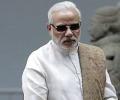
Congress leader Jairam Ramesh interacts with readers on Rediff Chat as he discusses the period that changed India's history, forever.

'We have made no effort in recent years to build a national opinion on Kashmir amongst political parties.' 'At least we should speak as one country.' 'It has been a failure of our foreign policy that we have not been able to convince world opinion that something needs to be done about Pakistan.'


Indians all over the US are going beyond being human and are learning to be humanitarian and expand their philanthropy activities finds Ajailiu Niumai.
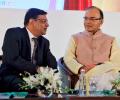
'When I met the prime minister on November 15 there was no RBI report with the prime minister as to why this was done.' 'When I asked the PMO officer about this, he said the RBI did not bring this to the PM and did it independently.' 'When I asked how could the RBI ban DCCBs from accepting deposits from farmers in old notes when the government gazette released on November 9 allowed them to do so, this officer told me that not even senior PMO officials had any idea about this RBI ban.'
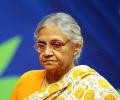
It is unlikely that Delhi's outgoing chief minister will be able to make a comeback in politics. For her, the innings is truly over, writes Pankaj Vohra.

Incidents of arson, firing and vandalism were reported from Madhya Pradesh, Rajasthan, Uttar Pradesh, Bihar and Punjab as protesters agitated against the dilution of the SC/ST Act.
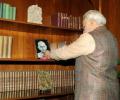
The prime minister is checking in with baggage of the kind that will make history, any which way things take a turn, says Sheela Bhatt/Rediff.com
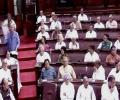
The AgustaWestland issue was fiercely debated in the Rajya Sabha on Wednesday with members of the Bharatiya Janata Party and Congress blaming each other.
